
The Bird That Paused
I watched a bird the other day.
For several minutes, it moved tirelessly between the ground and a nearby tree. It searched carefully, picked up a twig, flew back to the branch, then returned to the ground for another. Again and again, it repeated the same pattern with quiet purpose. There was no wasted movement - only steady attention to the work before it.
Then something unexpected caught my attention.
The bird stopped.
It remained on the branch without gathering another twig. Unmoved by the sounds around it or the people passing nearby, it simply stayed there, gazing into the distance. Sunlight rested on its feathers as the breeze gently stirred the branch beneath it. As I watched, I couldn’t help but wonder if I had just witnessed something we often forget—an unhurried pause in the midst of purposeful work. Whether the bird was resting, observing, or simply being, its stillness drew my attention to the beauty of stopping, if only for a moment.
The Lost Art of Pausing
Perhaps we have become so accustomed to movement that pausing no longer comes naturally. Even while our hands are occupied with the present, our minds are already racing ahead. Beneath our awareness, unfinished conversations, responsibilities, and worries continue to circulate, quietly shaping our attention.
We may stop physically, but inwardly we continue to move.
Like a car travelling at speed, we do not come to an immediate halt when the brakes are applied. Momentum carries us forward before we gradually come to rest. In much the same way, our bodies need time to slow after a busy day. Our breathing steadies. Our muscles begin to soften. The sense of urgency slowly loosens its grip.
Our minds often take even longer. As the external noise fades, the internal noise often becomes more noticeable. Thoughts and emotions we have quietly carried begin to surface. Rather than sitting with them, we may instinctively reach for another distraction- our phones, the television, or another task- not because we need more stimulation, but because stillness can feel unfamiliar.
Perhaps this is why genuine pauses can feel surprisingly difficult. We have become skilled at doing, yet less practised in simply being.
Rest Is a Rhythm
Watching the bird, I realised that its pause did not seem separate from its work. It was simply part of it.
The bird gathered twigs with purpose, then rested without apology. It did not appear anxious about the work still to be done or compelled to fill every moment with activity. Its stillness belonged to the same rhythm as its movement.
Nature is full of such rhythms. Day gives way to night. The tide comes in and goes out. We breathe in and breathe out. Even our hearts alternate between contraction and relaxation with every beat.
Perhaps rest was never intended to be the reward we receive only after everything is finished. Perhaps it has always been woven into the rhythm of life itself.
Yet many of us have learned to postpone rest. We tell ourselves, I’ll stop when this is done.
But the list is rarely complete. There is always another email to answer, another room to tidy, another responsibility waiting just beyond the one we’ve finished.
If we wait until everything is done before we pause, we may find that the moment never
comes.
An Invitation
The image of that bird has stayed with me.
Not because it did anything extraordinary, but because it reminded me of something ordinary that I so easily overlook. Perhaps rest begins with small moments rather than grand gestures. A slow breath before beginning the next task. Sitting quietly with a warm cup of tea. Feeling the warmth of the morning sun. Listening to birdsong without hurrying on. Looking out of a window instead of reaching for a screen.
These moments may seem insignificant, yet they gently interrupt the momentum of our day. They remind us that life is not measured only by what we accomplish, but also by our capacity to be present within it.
The bird eventually took flight again.
Its work was not abandoned. The nest still needed building.
But for a brief moment, it simply paused.
Perhaps today, we can too.
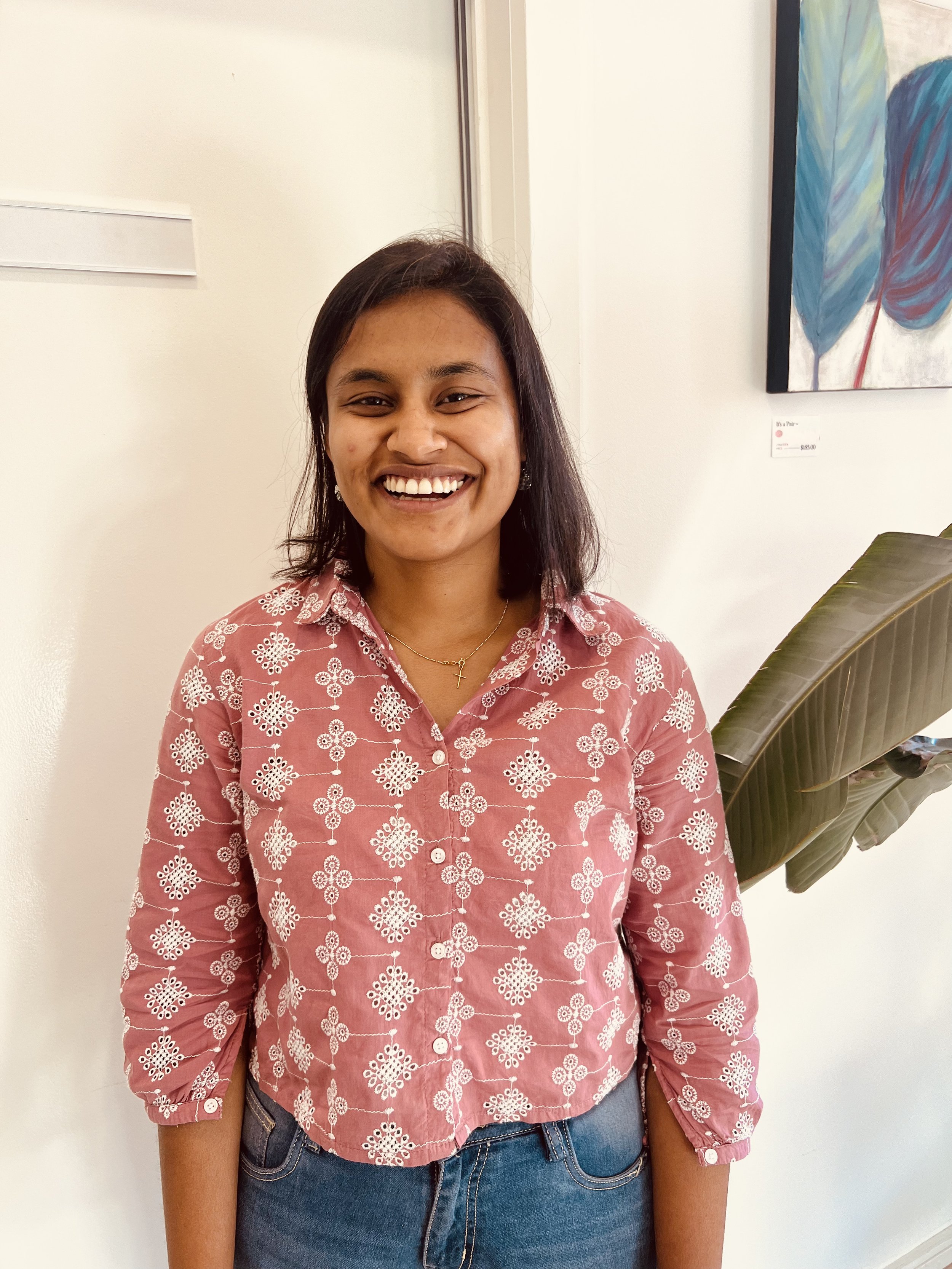
Author: Shalini Shaji
REGISTERED COUNSELLOR & PSCHOTHERAPIST